

WhatsApp Introduces Usernames, Lets Users Connect Without Sharing Phone Numbers - Head Kunal Shah Urges "Get Yours Now"
WhatsApp has begun rolling out a new username feature that lets users chat without exchanging phone numbers, marking a major shift in the platform's decade-old identity system. WhatsApp Head Kunal Shah announced the feature on X, urging users to reserve their usernames early. The rollout includes an optional Username Key for added privacy, no public directory for discoverability, and the ability for creators and businesses to match usernames across Meta's apps.


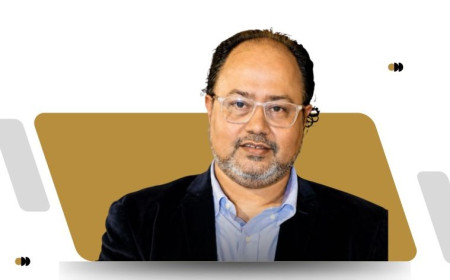
WhatsApp has begun rolling out usernames globally, a feature that will let users connect and chat without sharing their phone numbers - marking the most significant shift in the platform's identity system since it launched. The announcement was made by WhatsApp Head Kunal Shah, who urged users on X to reserve their preferred usernames early. "Timing is everything. Joined WhatsApp early enough to claim my username before we release this to the world. Time to get yours. A more private way to connect. Coming soon to your WhatsApp," Shah wrote.
A Decade-Old Identity System Evolves
For more than a decade, WhatsApp's identity system has revolved around a simple premise: a user's phone number is their digital identity, an approach that helped fuel trust and simplicity as the service scaled to more than three billion users. But that design also created friction in an era where users increasingly want greater control over who can access their personal information.
According to WhatsApp, the feature is intended for situations where users may prefer greater privacy, such as connecting with someone at a networking event, a new classmate, neighbours, or community groups.
How It Works
Users will be able to connect using a username instead of sharing their phone number, with no public directory for browsing usernames - meaning people must know a user's exact username before messaging them for the first time. Alongside usernames, WhatsApp is introducing a new security feature called the Username Key - an optional layer that first-time contacts must enter before sending a message using a username, which users can update or change whenever they choose.
Existing chats and contacts will continue to work normally using current phone numbers, and end-to-end encryption, blocking, and reporting features will continue to function exactly as they do today.
Rollout Details
Usernames can contain up to 35 characters and can be changed, updated, or removed at any time. To reserve a username, users need the latest version of WhatsApp, with the option available under Settings, then Account, then Username. WhatsApp has explained that with over three billion people on the platform, a lot of names overlap, which is why it is opening reservations early so everyone has the opportunity to select the username that matters to them.
The company also plans to reserve usernames associated with well-known public figures and celebrities to reduce impersonation, while the rollout is happening in phases with availability varying by region.
Consistency Across Meta's Apps
Creators, businesses, and organisations will be able to reserve the same usernames they already use on Instagram or Facebook, helping them maintain a consistent identity across Meta's family of apps. This reflects WhatsApp's growing ambitions beyond person-to-person messaging, as the platform increasingly positions itself as a hub for businesses and creators as well.
Why It Matters
For WhatsApp, the introduction of usernames is more than a convenience feature - it marks a subtle but significant rethinking of digital identity, placing greater distance between a person's real-world phone number and their online conversations, while reinforcing privacy as the platform's defining competitive advantage.
The move comes at a pivotal moment for WhatsApp under Shah's leadership, as the platform continues to evolve from a simple messaging tool into a broader ecosystem spanning commerce, creators, and private social connection - all while trying to preserve the privacy-first positioning that has long differentiated it from other social platforms.
What's Your Reaction?
 Like
0
Like
0
 Dislike
0
Dislike
0
 Love
0
Love
0
 Funny
0
Funny
0
 Wow
0
Wow
0
 Sad
0
Sad
0
 Angry
0
Angry
0















Comments (0)