

AI's Hidden Power Problem Just Got a $550 Million Answer - Antora Energy Raises Series C to Scale Thermal Batteries for Data Centres
Antora Energy, a California-based thermal battery startup, has raised $550 million in a Series C round co-led by Eclipse and G2 Venture Partners - one of the largest cleantech funding rounds of 2026. Backed by Bill Gates' Breakthrough Energy Ventures, BlackRock, and Temasek's Decarbonization Partners, the company will use the capital to build a second factory for its carbon-block thermal batteries. With a live 5 GWh deployment in South Dakota already operational, Antora is positioning itself at the intersection of two of the decade's most urgent trends: AI's insatiable energy demand and the global transition to renewable power.

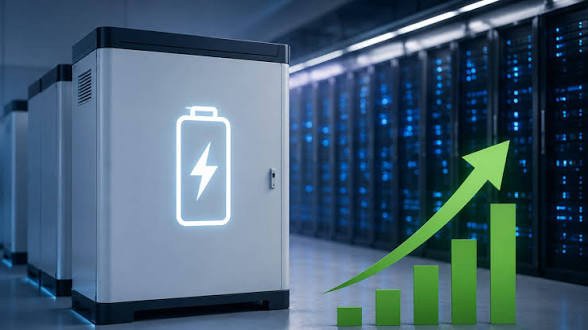
Every week, a new AI data centre breaks ground somewhere in the world. Every week, the same question resurfaces with greater urgency: where is the power coming from? Antora Energy thinks it has part of the answer - and $550 million in fresh capital to prove it.
Battery storage startup Antora Energy raised $550 million to expand production of its thermal batteries, which can help heavy industry and data centres lower costs and run on renewable energy. The Series C round was co-led by Eclipse and G2 Venture Partners, with participation from Bill Gates' Breakthrough Energy Ventures, BlackRock, and Temasek Holdings' joint venture Decarbonization Partners. The round values Antora at approximately $2.47 billion.
Not the Battery You Know
Antora is not building lithium-ion cells. Its technology is fundamentally different - and deliberately so. Antora's batteries store low-cost electricity as heat in insulated blocks of solid carbon, then deliver that stored energy as heat or electricity on demand. The carbon blocks absorb cheap electricity - typically from wind or solar during periods of peak renewable generation - and hold it as thermal energy until it is needed, at which point it can be discharged as heat for industrial processes or converted back into electricity.
The technology allows operators to buy and store cheap energy when renewable output is abundant and demand is low, then discharge it when the sun sets, winds slow, or power prices rise.
The design is mechanically simple, uses abundant materials, and is well-suited to the kind of multi-day storage that lithium-ion batteries - optimised for two to four hours - cannot economically provide. For energy-intensive facilities like data centres and industrial plants that need reliable, around-the-clock power at manageable cost, that distinction matters enormously.
Proof in the Ground, Not Just the Pitch Deck
Antora's first commercial project launched this spring - a wind-powered thermal battery system deployed with bioprocessing company POET at its Big Stone City facility in South Dakota. The project deploys more than 200 Antora thermal battery units, delivering more than 5 GWh of multi-day thermal energy storage - the largest deployment of its kind in the world - and moved from initial construction to energy delivery in under 12 months.
That reference project is what separates Antora from the many energy storage startups that have raised large rounds on the strength of lab results and projections. A 5 GWh live deployment is something that data centre buyers and industrial customers can evaluate in the real world - not in a model.
Why Data Centres Are the Target
Demand for batteries has surged as renewable energy makes up a growing share of electricity generation. AI is accelerating that demand in ways that would have seemed implausible just three years ago. Data centres running large language models and AI inference workloads consume extraordinary amounts of power continuously - and the grid infrastructure to supply that power is simply not keeping pace with the speed at which the hyperscalers want to build.
The result is a bottleneck that money alone cannot quickly resolve. Substations take years to permit and build. Transmission lines face regulatory hurdles that can span a decade. Thermal batteries that can be manufactured, shipped, and deployed in months represent a faster path to the stable, cost-effective energy supply that data centres require.
What the $550 Million Funds
The Series C will allow Antora to build a second factory to produce its modular batteries for pairing with renewables or grid power, and to accelerate deployment of large-scale projects across the United States as demand from AI infrastructure and industrial decarbonisation customers continues to grow.
The round is one of the largest cleantech financings of 2026 - and a signal that institutional capital, from climate-focused funds to mainstream asset managers like BlackRock, is now treating energy storage not as a peripheral clean energy play but as critical infrastructure for the AI economy.
What's Your Reaction?
 Like
0
Like
0
 Dislike
0
Dislike
0
 Love
0
Love
0
 Funny
0
Funny
0
 Wow
0
Wow
0
 Sad
0
Sad
0
 Angry
0
Angry
0















Comments (0)