

Jharkhand Launches Women's Incubation Programme With IIMCIP — But Questions Arise Over Why the State's Own Startup Accelerator Was Overlooked
Jharkhand State Livelihood Promotion Society (JSLPS) has signed a three-year MoU with IIM Calcutta Innovation Park (IIMCIP) to train 50,000 women entrepreneurs across all 24 districts of the state. The programme will assess Sakhi Mandal members across 264 blocks, select the top 500 high-potential founders for advanced training, and build a pipeline of growth-oriented women-led enterprises. Notably, the implementation mandate was handed to Kolkata-based IIMCIP - overlooking Startup Jharkhand, the state's own DPIIT-recognised startup accelerator, raising questions about institutional alignment within Jharkhand's own ecosystem.

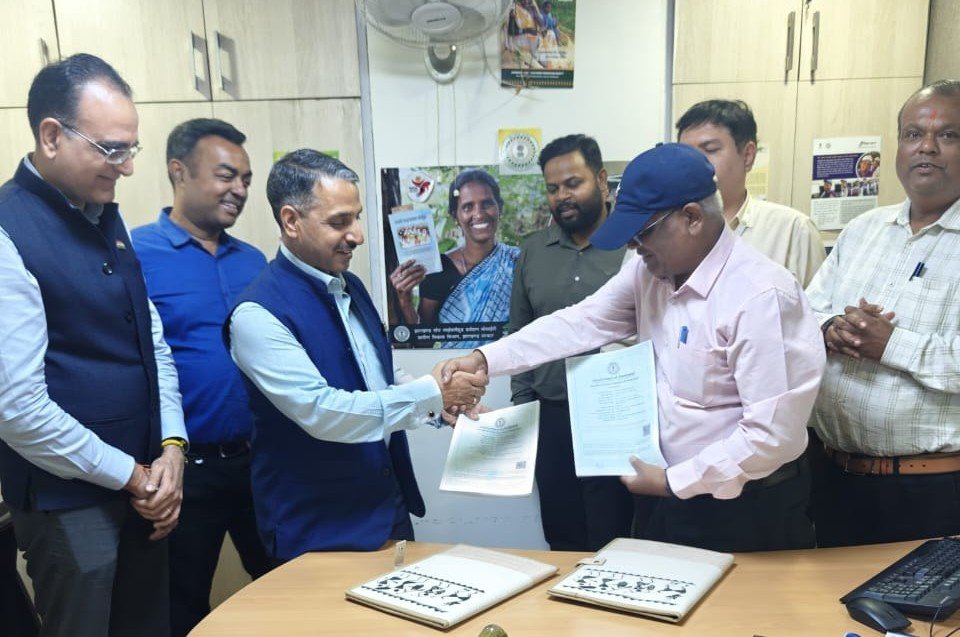
The Jharkhand State Livelihood Promotion Society (JSLPS) has signed a three-year Memorandum of Understanding with IIM Calcutta Innovation Park (IIMCIP) to launch a large-scale incubation and training programme for women entrepreneurs across all 24 districts of the state. The initiative, aligned with the Ministry of Rural Development's National Rural Livelihoods Mission framework and the Viksit Bharat Mission, will train 50,000 women entrepreneurs and identify and intensively support the top 500 high-potential founders from Jharkhand's grassroots Sakhi Mandal network.
The programme is well-intentioned and meaningfully scaled. But one question is worth asking - and Jharkhand's startup community is already asking it: why was implementation handed to a Kolkata-based incubator when the state has its own DPIIT-recognised, Section 8 not-for-profit startup accelerator right here?
What the Programme Entails
Under the initiative, rural women entrepreneurs associated with Sakhi Mandals across Jharkhand's 24 districts and 264 blocks will be assessed to identify high-potential enterprises and entrepreneurial talent. From this, the top 500 women entrepreneurs will be selected and provided advanced training in enterprise and business management, equipping them with the skills, knowledge, market access, and income enhancement capabilities needed to scale their ventures sustainably.
IIMCIP will train 50,000 women entrepreneurs through a customised approach to grassroots entrepreneurship development, equipping them with capabilities in innovation, market access, and income enhancement.
The Elephant in the Room
Jharkhand has its own startup infrastructure. Startup Jharkhand - the I-Hub Startup Jharkhand Foundation - is a DPIIT-recognised, Section 8 not-for-profit startup accelerator headquartered in Ranchi, built specifically to catalyse the state's entrepreneurial ecosystem. It has organised Jharkhand's largest startup summits, runs the SAKSHAM Accelerator for grassroots founders, has active partnerships with JIIDCO, NABARD, XLRI, IIT ISM Dhanbad, Amity University Ranchi, Mission Blue Foundation, Premson Motors, and CyberPeace Foundation, and has been building institutional bridges for exactly the kind of women-led, community-rooted entrepreneurship that JSLPS is now trying to promote.
By routing this mandate to IIMCIP - JSLPS has, perhaps inadvertently, sent a signal that the state's own ecosystem enablers are not yet considered credible enough to execute at this scale. That perception, if unchallenged, risks becoming self-fulfilling: the more state mandates flow out of Jharkhand to external institutions, the slower Jharkhand's own incubation infrastructure matures.
The Broader Pattern
The irony is that local organisations like Startup Jharkhand often know the terrain - the specific challenges of Jharkhand's Sakhi Mandal entrepreneurs, the market linkages available within the state, the language, the cultural context - far better than any institution operating from another city ever could.
The JSLPS-IIMCIP programme may well succeed on its own terms. But if Jharkhand's government is serious about building a self-sustaining startup ecosystem - not just delivering training numbers - it will need to start routing institutional mandates toward the enablers it is simultaneously trying to build, rather than around them.
What's Your Reaction?
 Like
0
Like
0
 Dislike
0
Dislike
0
 Love
0
Love
0
 Funny
0
Funny
0
 Wow
0
Wow
0
 Sad
0
Sad
0
 Angry
0
Angry
0














Comments (0)